


Bandha Flow
- Sarah Haggerty

- May 13, 2019
- 3 min read

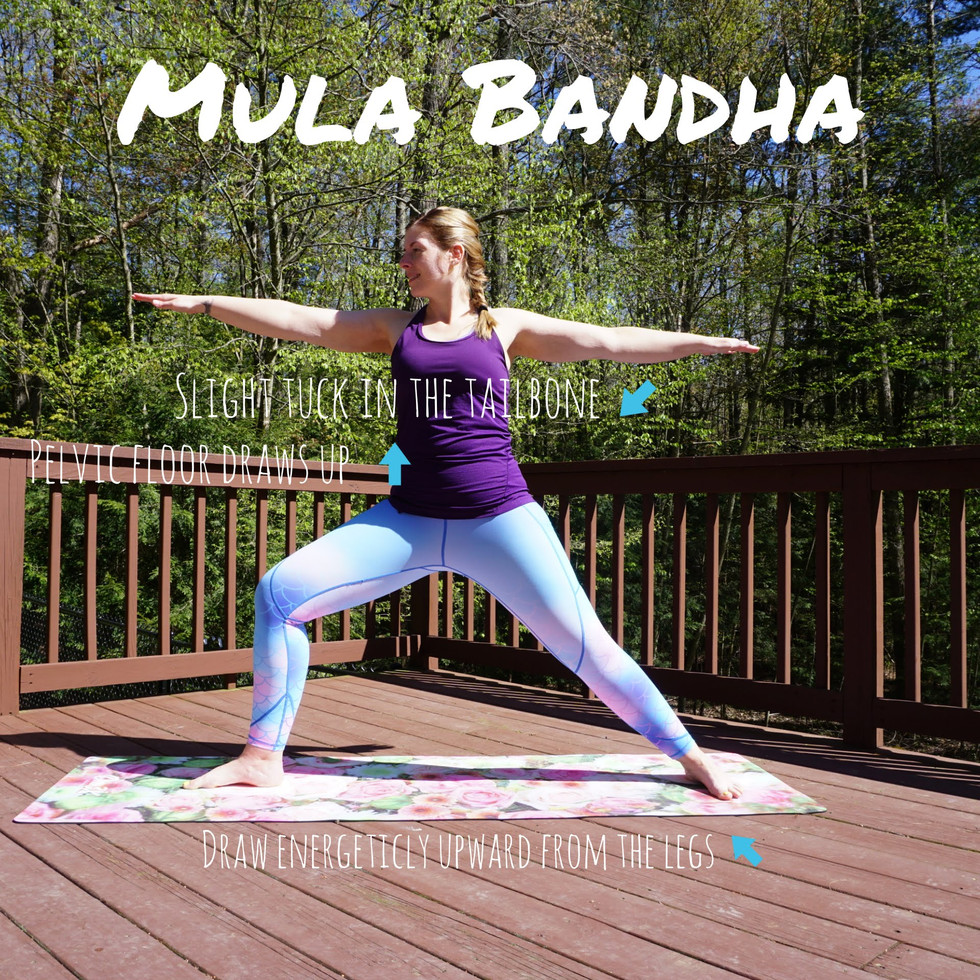


Instead of a peak pose, this week, I'll be sharing a sequence based on the Bandhas. From Sanskrit, Bandha means lock or bond (Wikipedia). There are various muscular centers within the body that when active, can energize strength and stability and help endurance. We don't often talk about the Bandhas in many faster paced classes. To learn the sensation and train to be able to use a Bandha, it takes slowing down and focus. I like to bring it into my practice and teaching because of the benefits of healing postpartum and development of strength in beginning practicioners.
There are three Bandhas and one combination. Mula Bandha is the drawing up and contracting of the pelvic floor or perineum. Uddiyana Bandha is drawing inward of the front abdomen into the diaphragm/ribcage. Jalandhara Bandha is the front neck drawing the chin and chest together. The Maha Bandha is all three Bandhas working together in unison.
To start our sequence, Mula Bandha is the most commonly referred to of the Bandhas. It can be thought of as an alternative to kegals. This Bandha is centered at the pelvic floor, contract and draw up toward the base of the spine. Practicing Mula Bandha can be beneficial to practice for stability, prevent against pelvic floor issues, and heal/prepare for childbirth. In Warrior 2 (Virabadrasana II), draw your attention to the orientation of the pelvis. Use the front core muscles to tuck the tailbone, lifting up at the same time. Standing poses and inversions are a great place to start practicing Mula Bandha.
Uddiyana Bandha in some forms of yoga is a separate breathing technique. In this sequence, I'll be showing it from an Ashtanga perspective. The Uddiyana Bandha is centered at the core muscles/bottom of the diaphragm. Send the navel back and up toward the spine and heart. Practicing this form of Uddiyana Bandha can be beneficial for regulating breathing, helping to heal from diastasis recti, and strengthening the core muscles. From Navasana, send awareness to the upper abdomen. Draw up as you inhale and back as you exhale. You should see a change in the physical shape of the abdomen as you continue breathing this way. Exhale and release. Core strength poses or going from a bend to standing are both excellent opportunities to add in Uddiyana Bandha.
Jalandhara Bandha is centered in the neck muscles. Jalandhara means net (Wikipedia) which makes sense from the sensation this Bandha creates in the body. The neck muscles employed in this Bandha connect across the chest, when the sternum is pulled up to rest the chin, the tongue presses to the top of the mouth. This Bandha is beneficial for practicing backbends and strengthening the neck and can help with cervical spine issues. Sitting in Easy pose, lift the sternum and drop the chin. Press the chin back toward the spine (you will get a double or triple chin!) And press the tongue to the roof of your mouth. Breathe as normal or incorporate a technique. A natural place for this Bandha is also during Plow pose or Bridge pose.
Maha Bandha is a combination of all the Bandhas into one full body lock or something like an energy flush. Starting on the end of the exhale, begin by finding Mula Bandha. Then engage Uddiyana Bandha, followed by Jalandhara Bandha. On the inhale, release and return to a stable pose. The sensation of Maha Bandha is almost like a reboot to the circulation and energy flow of the body. A great place to incorporate this Bandha is at the beginning or right before Savasana.
I hope you enjoyed learning more about the Bandhas, as always, listen to your body and do what works for you!


Comments